Français
 Italiano
 Deutsch
 Español
 Português
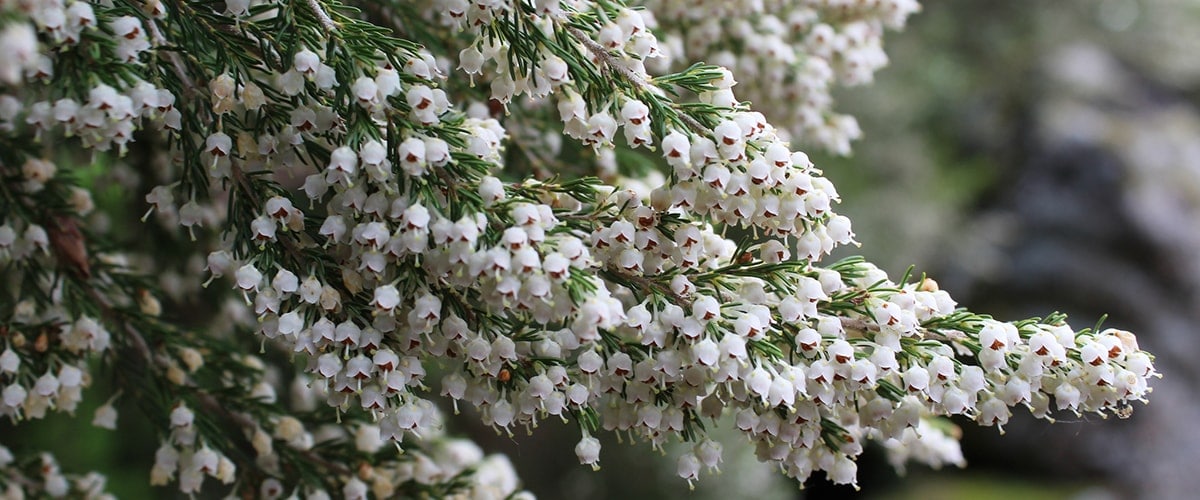
For the making of the pipe, a variety of wood called TREE HEATHER (Erica arborea) is used. It is a shrub with white flowers that can reach 4 to 6 meters in height and grows wild among cork oaks or in the maquis. It has the particularity of having, between the trunk and the roots, a growth in the shape of a ball called a BURL. Only the burl is suitable for making the different models.
Depending on the land, it takes 40 to 50 years to obtain an exploitable root. There are some CRUS better than others.
To make a good pipe, you must start with good briar. For example, it is known that difficult soil produces denser briars, therefore more beautiful and better for smoking.
The briars selected by BUTZ-CHOQUIN come from the best "slopes" of Corsica, Algeria, Morocco, Tunisia.
The process of transformation begins with him.
The digger knows, upon seeing a heather bush, whether it will produce a sufficient stump (about 20 cm in diameter at minimum). He does not make clean cuts and thus saves the bush that is too young for later.
His work consists of digging up the stump, separating it from its roots, cutting it from its trunk, then cleaning it of the earth and stones mixed in it. He finally splits it into quarters to check that it is healthy. These are the stump quarters, ready to being processed, which he sells to the rough blank manufacturer, located nearby.
The harvesting or pulling period takes place from October to March-April. In the other months, the ground is too dry for pulling to continue without the risk of cracking and deterioration of the roots.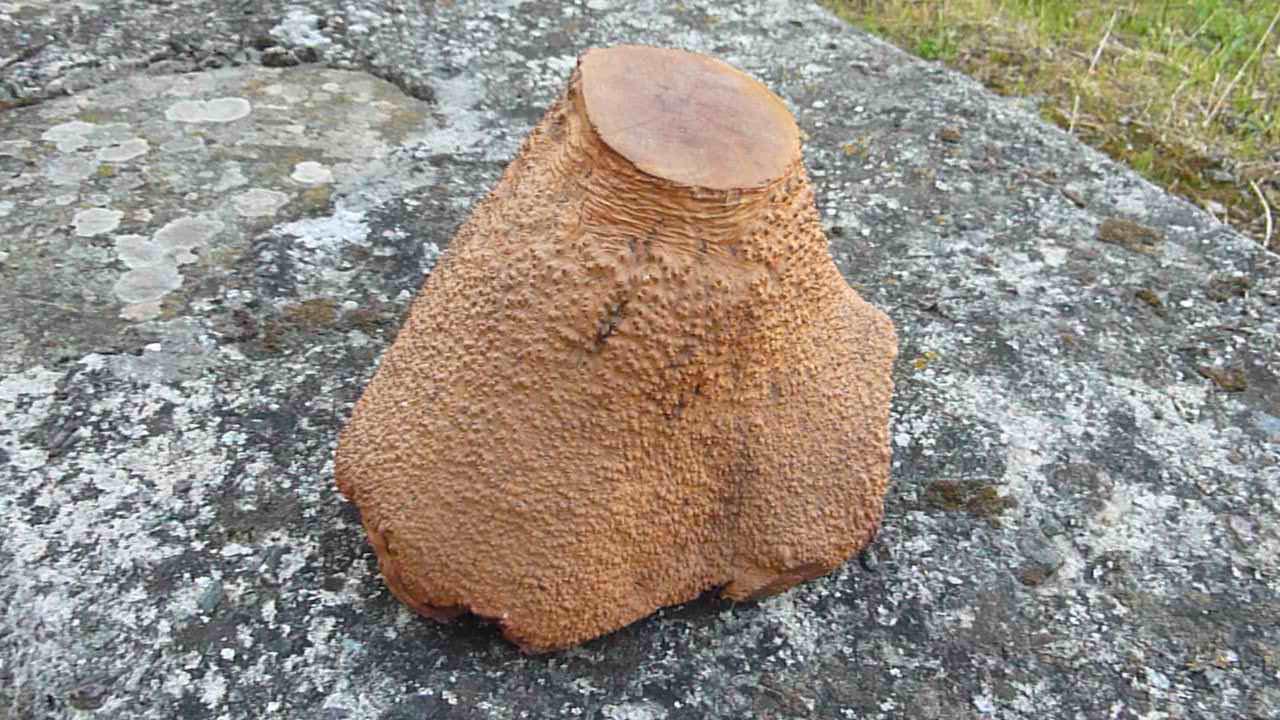
At the sawmill, the stumps are piled up in sheds and in pits. Covered with branches or sacks, they are kept continuously moist to prevent them from cracking. Then comes the sawing of the blanks, a rare and difficult profession.
The sawyer must study each quarter of the stump to get the best yield. He must also strive to follow the grain of the heather as closely as possible. Depending on the defects to be removed, and according to the characteristics of the stump, he will cut it into MARSEILLAISES which will be used for make straight or RAISED pipes that will become curved pipes.
It takes 5 to 6 quintals of stumps to obtain a bale of blanks. The sawyer simultaneously selects the qualities (extra, first, and breed, the latter being reserved for second-grade pipes).
After sawing and sorting, the blanks are immersed in a copper tank filled with water. They are steamed in boiling water for nearly 20 hours. This operation aims to remove the sap from the heather and thus stabilize the wood.
The blanks then undergo an initial very slow natural exchange. Already sorted by quality, they will now be sorted by size. There are 13 sizes of MARSEILLAISES and 6 sizes of RELEVES.
They are then counted and bagged. The unit of sale is the bale, which corresponds to a given quantity of blanks, varying according to the size. It can range from 60 to 36 dozen for the most common sizes.
Only the best of these blanks will, after their slow and meticulous transformation into pipes, be stamped BUTZ-CHOQUIN.
The use of this material for the making of pipes is an "invention" of Saint-Claude that dates back to the 1850s. The first blanks came from the south of France. No other type of wood has been able to replace it since, among smokers.
It is a very beautiful wood to the eye because of its rare veins or grain, a very dense wood, fire-resistant, and whose aroma blends wonderfully with that of tobacco.
The tree heather is found on the coast of all the countries bordering the Mediterranean, namely: