Français
 Italiano
 Deutsch
 Español
 Português

Before lighting their cigar, many aficionados practice "dry pulling," that is to say, they draw on their cigar once it has been cut but before it is lit. Some flavors will appear, but make no mistake, the aromas developed upon lighting will certainly be very different. Dry pulling also allows you to feel the "resistance" of the cigar. A good lighting is very important, which is why you should obtain quality cigar accessories !
Directly, the first puffs from lighting immediately indicate how the rest of the experience will go. If a cigar is unpleasant from this moment, it already loses points on its final rating. The now-lit cigar offers our palate the perception of its flavors and strength.
The aromas of a cigar are perceived in two different ways:
During tasting, the aromas (just like the strength) will evolve throughout the smoking. Some cigars will be more "linear," meaning that the aromas will change little.
Others will be more "evolving," with the aromas varying more intensely.
Almost all aficionados divide the tasting into three phases, corresponding concretely to the first, second, and final thirds of a cigar:
These 3 stages each have a different function.
Indeed:
These changes will therefore be perceived through retronasal olfaction. Olfaction, for its part, practically does not change. The smell of the smoke (perceived through the nasal passages) remains constant from beginning to end.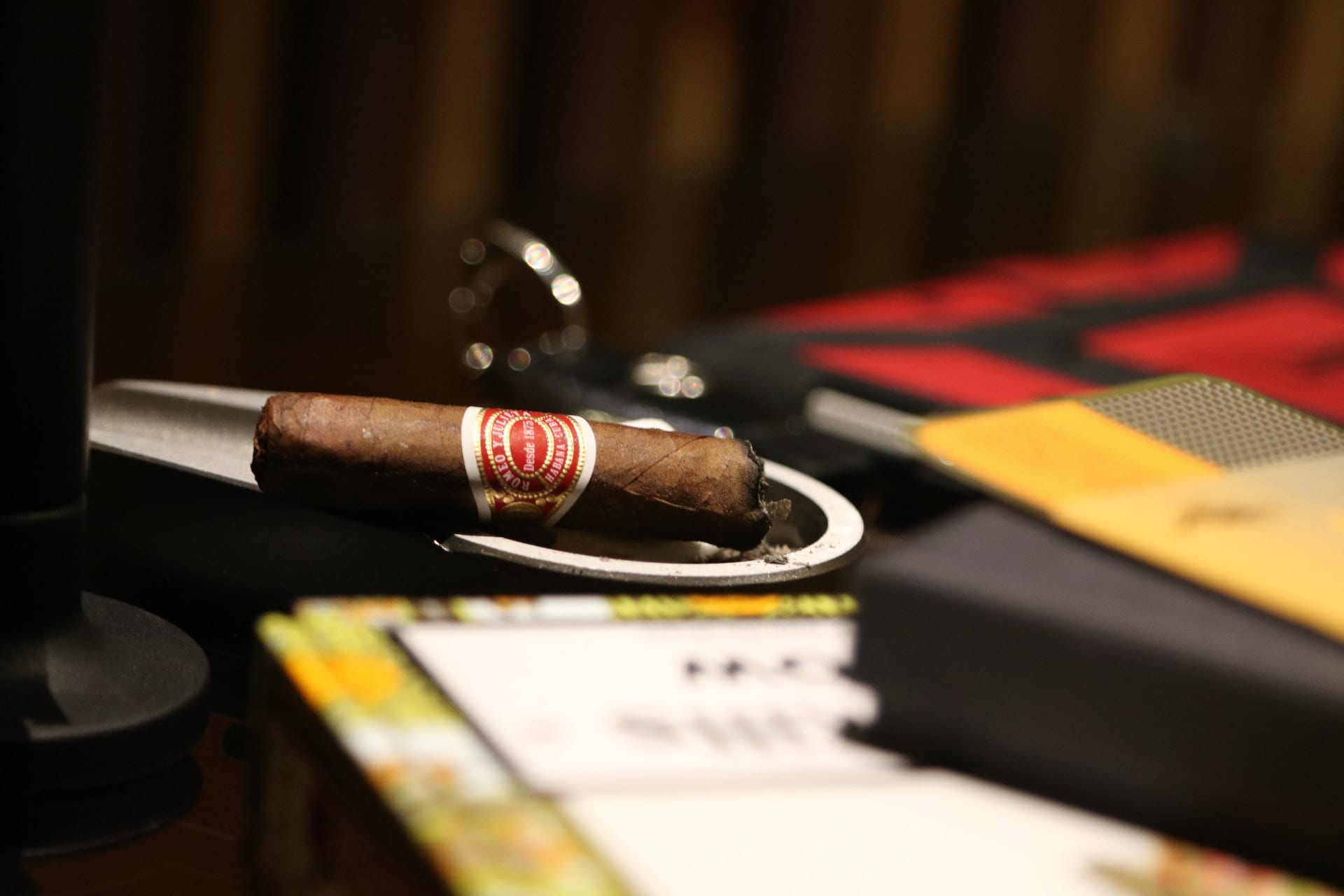
Advice: Take your time to enjoy a cigar. Rushing (and consequently taking puffs too quickly) causes the cigar to overheat, which will make it lose its most pleasant aromas. The lower the temperature of the cigar, the more noticeable the aromas will be.
The aromatic analysis of a cigar is certainly acquired through experience and multiple comparisons, but it follows simple rules. Tasting can be conducted according to an easy-to-remember tempo: the rule of the three thirds seen previously.Do not hesitate to note on cards the sensations observed step by step.