Français
 Italiano
 Deutsch
 Español
 Português
Welcome to our lighter advice section. Whether you collect classic lighters, prefer refillable models or simply want to learn more, you are in the right place. Discover how to maintain your lighter, choose the right model for your needs and understand the differences between gas, petrol and electric lighters. Our guides also explain how to extend a lighter's lifespan and solve common problems, such as a lighter that no longer ignites. Whether you need a practical accessory or a collector's item, this advice will help you make the right choice and get the most from your lighter.
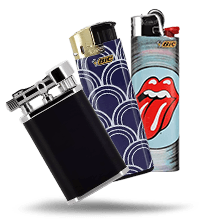
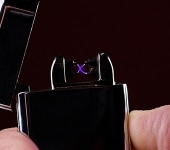
Plasma lighters, also called electric arc lighters, represent a notable innovation in the field of ignition devices. Unlike traditional lighters that use gas or gasoline, these lighters operate thanks to an electric discharge creating a plasma arc between two electrodes. This technology offers a safer and more environmentally friendly alternative for generating a flame. Operating principle of a plasma lighterThe heart of the plasma lighter relies on the creation of an electric arc. When activated, a high voltage is applied between two closely spaced electrodes, ionizing the surrounding air and thus forming a plasma. This arc reaches extremely high temperatures, sufficient to ignite various combustible materials. The necessary energy is provided by a built-in rechargeable battery, generally lithium-ion, which can be recharged via a USB port. Advantages of plasma lighters Ecological: Requiring neither gas nor gasoline, plasma lighters reduce the emission of harmful substances and avoid the consumption of fossil fuels. Economic: Thanks to their rechargeable battery, they eliminate the need to regularly purchase fuel refills, offering a sustainable and cost-effective solution. ... Learn more
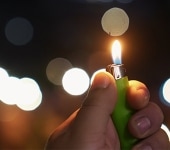
Lighters are everyday tools commonly used for various applications, from lighting candles to cooking. There are several types of lighter flames, each with specific characteristics and temperatures. Understanding these differences can help choose the lighter that best suits your needs. The different types of lighter flames Soft flameThe soft flame is typical of classic gas lighters. It is characterized by a yellow-orange flame, resulting from incomplete combustion. This flame is relatively stable and suitable for everyday uses such as lighting cigarettes or candles. Wind flameThe so-called storm or windproof lighters produce a more intense flame that withstands windy conditions. Thanks to better combustion of the gas, often butane, these lighters generate a stable blue flame, ideal for outdoor use or in challenging environments. :contentReference[oaicite:0]{index=0} Torch flameThe torch lighter is designed to produce a fine and concentrated flame, similar to that of a welding torch. This blue flame reaches high temperatures, making it suitable for tasks requiring intense heat, such as caramelizing in cooking or lighting cigars. Temperatures associated with different flames ... Learn more
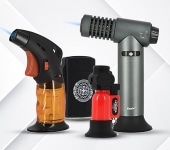
Storm lighters are reliable companions for outdoor adventure enthusiasts, smokers, and anyone who needs a dependable fire source in tough conditions. They are designed to work efficiently even in strong winds, hence their name. However, like any other tool, regular maintenance is crucial to ensure their performance and longevity. This article guides you through the essential steps to maintain your storm lighter. Identification of necessary tools and materialsBefore starting the maintenance of your storm lighter, it is important to gather the necessary tools and materials. Here is a basic list: A screwdriver to disassemble the lighter A clean cloth Isopropyl alcohol for cleaning Compressed air Spare parts if necessary (flint, wick, etc.) Cleaning the storm lighterRegular cleaning is essential to ensure the proper functioning of your storm lighter. Here is how to proceed: Disassembly : Remove the flint and the wick from the lighter. If possible, disassemble the other parts following the manufacturer's instructions. Cleaning : Dip a clean cloth in isopropyl alcohol and clean all internal and external parts of the lighter. Use compressed air to remove debris from ... Learn more
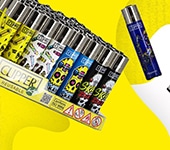
Clipper lighters are known worldwide. Their shape, practicality, and original design almost make them trendy items. Some even enjoy collecting them, especially the models released in limited edition. Here are all the secrets of Clipper lighters.Clipper: the Spanish brand that has won the heart of the worldIt was in 1959 that the Clipper brand was born, following the purchase of its patent by the Puig family, who already managed the company Flamagas SA in Barcelona. Originally, the Clipper was created by the English company Bryant & May, specialized in the manufacture of gas burners. The Puig family, seeking to diversify the activities of Flamagas SA, which until then had been focused on the distribution of perfumes and various cosmetics, seized this opportunity to expand its product portfolioTwelve years later, the first Clipper lighter was created. It was the very first refillable gas model in the world, long before BIC lighters. Very quickly, this small cylindrical lighter won the affection of people everywhere. It is then marketed in more than 90 countries! Each year, no fewer than 450 million lighters are thus distributed on the global market.It must be said that its very ... Learn more
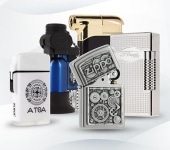
À less begging here and there, any self-respecting smoker has their lighter. It is an essential accessory for lighting a cigarette, a pipe, or even a cigar. But do you know the history of the lighter? Here is an informative article on the subject that will allow you to show off your knowledge to your loved ones. The brief history of the lighter The lighter was born in prehistoric timesYou all know the ancestor of the lighter, since you studied it at school. Yes, it is indeed flint! This very hard stone was used to create sparks and thus, start a fire, traces of which would date back 400,000 years. The first humans who could start a fire used the percussion technique to ignite fuels. In other words, they rubbed stones against each other to create a spark.However, in order to achieve this, it was necessary to refine the technique and above all find the right materials. Indeed, striking a flint against just any other stone did not always yield the expected results. Through perseverance, fire was able to be mastered in a more official way precisely 15,000 years ago by Homo Sapiens.These prehistoric men found the foolproof way to make fire: by rubbing a siliceous rock against... Learn more
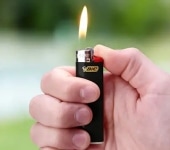
The BIC lighter brand is a company that is widely known for its products with attractive prices and high performance. In fact, it is the company behind some everyday flagship products such as pens, razors, and also lighters. On this subject, it is not surprising to wonder how this brand manufactures lighters, but also where it does so. Here is an overview of the origins of these everyday products used by everyone! Where are BIC lighters made?The brand's lighters are made in France. BIC is a French company that was established in 1954. It is indeed since that time that this brand has been involved in the design of all kinds of accessories. However, it was not until 1973 that it began to diversify its activities by choosing to design lighters. One of the headquarters of this large firm is located in Clichy, in the Paris region. One could thus assume that it is in Clichy that these accessories are designed. However, this is not the case.In reality, the company has planned a special place to set up its lighter manufacturing factory. However, there are several production plants in France planned for the manufacture of the brand's products. How are lighters made? The design of ... Learn more
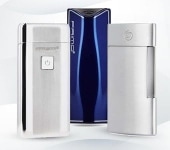
The first "electric" lighter appeared in 1874. It was the Saturn lighter. For some time now, they have been making a big comeback on the market. Electric lighters are more durable, therefore less polluting and more environmentally friendly. What types of electric lighter are available on the market? How do you choose one? How do they work? Let's take stock. The arc lighterThere are two types of arc lighters: the simple electric arc lighter and the double electric arc lighter. The first generates a single arc, whereas the second produces two that intersect. Its mode of operation is identical to that of a taser, in other words, they generate a high-intensity electric current to allow lighting a cigarette. It only takes a few seconds to achieve this.Their great advantage lies in the fact that they can withstand very unfavorable weather conditions, since wind or rain cannot affect the arcs. The pros : works anytime, even under complex weather conditions, easily rechargeable, a simple press of a button allows the arc to light up. The cons : its price and the need to have a charging source on hand if necessary. The spiral lighter The spiral lighter is rechargeable via USB port,... Learn more
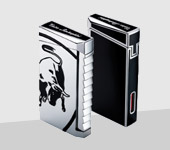
The European Union requires lighters equipped with child safety features On March 11, 2007, consumer safety saw a new advance thanks to a decision by the Commission requiring that no more lighters dangerous to children be on the European market. In this decision, the Commission asks governments to ensure that regular lighters sold in their territory are equipped with child safety features. It also prohibits the marketing of lighters (so-called " novelty lighters ») that imitate objects having a particular appeal to children. Luxury lighters are not targeted by the ban but must continue to comply with the general safety specifications applicable to these products.« I welcome the entry into force of these important provisions, which will strengthen consumer safety, and in particular, that of children in Europe » declared Ms. Meglena Kouneva, Commissioner for Consumer Protection. « Manufacturers have had ten months to adapt their products; They are allowed, at a minimal cost – a few euro cents per lighter –, to increase consumer confidence and to help prevent a considerable number of fires, accidents, and deaths. We continue to import large quantities of lighters from the Far East ... Learn more
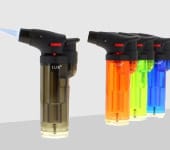
Filling a torch lighter may seem simple, but there are common mistakes to avoid to ensure its proper functioning. If you do not have the necessary experience or knowledge, you risk not filling your lighter correctly or damaging it. In this article, we explain a reliable, quick, and efficient method to fill your torch lighter. Follow our step-by-step guide below! Our tips for a successful refillTorch lighters, also called rigid flame lighters, require special attention when refilling. Follow these steps to ensure optimal results: Step 1: Purge your lighter First of all, it is crucial to completely empty the gas and air present in your lighter. To do this, press the refill valve usually located under the lighter using a small tool like a pen or a screwdriver. You will see gas (white) and air (transparent) escape.This step is essential to prevent compressed air from accumulating during filling. Step 2: Fill your lighter Once the lighter is completely purged, turn it upside down (head down) and place the gas canister above. Press the filling valve in small successive presses. Be careful not to fill continuously to avoid excess pressure. Know that your canister contains both ... Learn more
In France, many products are prohibited from sale or even distribution. This is the case for certain lighters, and we will look together at why they are prohibited, what the regulations are for the distribution of these accessories, and what the constraints are for the French when purchasing these lighters. Many prohibited lightersThe lighter is an accessory considered as an item related to the smoker's world, thus, it is obvious that many rules are implemented in order to be able to sell it or even to be able to buy it. Discover through this advice-article which lighters are prohibited from sale in France and the purchase restrictions for consumers regarding lighters. The regulation of lightersIn certain places, lighters may be prohibited or must comply with certain rules in order to ensure the safety of people nearby and in the surrounding area. There are many restrictions concerning petrol lighters, as well as gas lighters. We will look at all these restrictions together. Transporting lighters on the airplaneAccording to IATA's Table 2.3.A on regulations for the transport of dangerous goods as of January 1, 2019, lighters are prohibited in checked baggage, but also in the ... Learn more