Français
 Italiano
 Deutsch
 Español
 Português
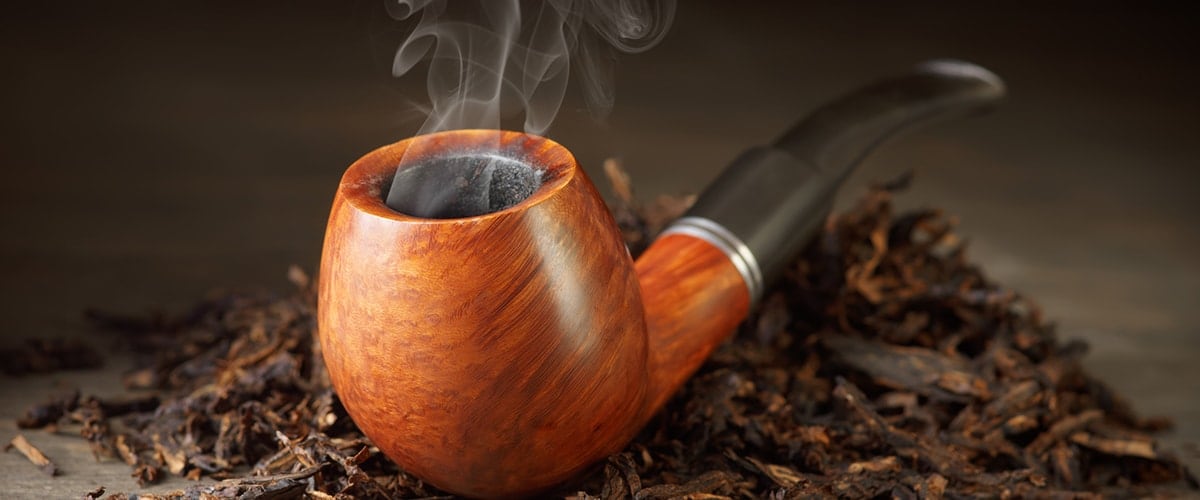
The complexity of choosing a pipe is greater than it seems. An object of desire, each one is different, both aesthetically and in terms of its use. Indeed, there are about as many pipes as there are smokers, which is why everyone has their own characteristics and preferences when it comes to a pipe. Before showing yourself off with your pipe, here is a comparison guide that, step by step, will help you choose your pipe.
There are three types of pipes: long, medium, and short. Each of them brings a specificity to the smoke. Here are in detail the particularities of each of the pipes of a wooden pipe.
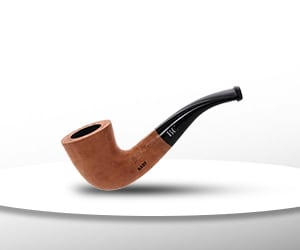
It is a quite small pipe. It is often appreciated by male and experienced smokers, because the smoke is very hot and strong when it reaches the mouth. These so-called "practical" pipes are not really recommended for beginners. Small, they are nevertheless very convenient for smokers who need to move around.
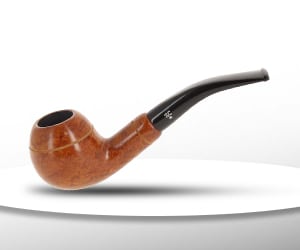
The standard pipe is the most common. It is suitable for all types of tobacco and smokers: beginners, experienced, women, and men. It offers a smoother smoke in the mouth and better sensations. It is a good introduction for beginners.
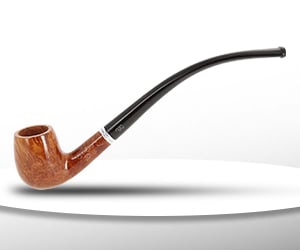
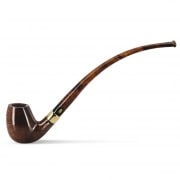
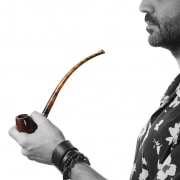
The reading pipe is characterized as being the pipe for women. Its longer stem allows the tobacco smoke to cool well before reaching the mouth. It is therefore milder than with other types of pipes and is more easily suited to the palates of ladies and fans of mild flavors.
The length of the pipe is very important. Every smoker has different expectations and tastes. That is why a novice will more easily choose a pipe with a classic or long stem, so that the smoke is less strong and hot. Lovers of strong aromas and hot smoke will rather opt for a classic, or even short, pipe.
After the size, the shape is also important. Indeed, the sensations will be different, because in reality, it is not only the aesthetic appearance that will sway a smoker toward one model rather than another, but also its practical aspect. Here is a review of the three most common pipe shapes:
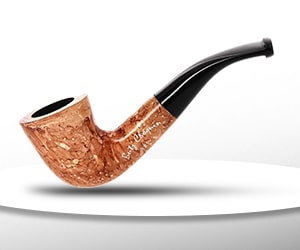
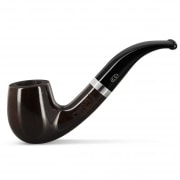
The curvature of the stem of bent pipes can be more or less pronounced, with a length more or less significant. These pipes are very aesthetic, but require a relatively difficult draw. However, they are balanced and light in the mouth.
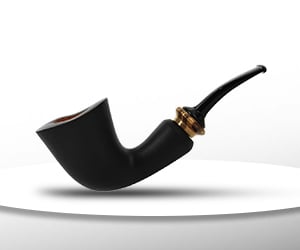
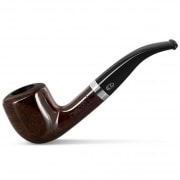
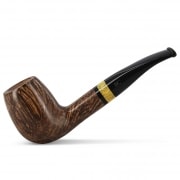
Bent pipes are probably the most common, as they are the easiest. The length of the stem is medium and the mouthfeel is simplified. However, be careful, these pipes are known to encourage the presence of moisture in the stem!
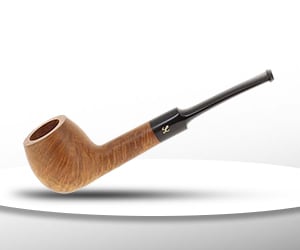
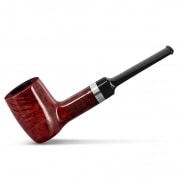
Due to their ergonomics, straight pipes feel heavy in the mouth and need to be well supported by the teeth. Nevertheless, it is an easy-to-use pipe in every way.
Depending on individual preferences, it is good to highlight these few points, in order to choose the most appropriate pipe model. This comparison table should help you with that.
| Types of pipes | Characteristics | Advantages | Disadvantages |
|---|---|---|---|
| Bent pipe | - Its aesthetics are praised - Several shapes and degrees of curvature |
- Light in the mouth, does not require biting hard with the teeth | - Favors the presence of moisture in the stem - Difficult draw - Not recommended for beginners |
| Bent pipe | - Aesthetic - Curvature of the stem less pronounced than the curved pipe |
- Good hold in the mouth - Suitable for novices as well as experienced users |
- Possible moisture in the stem - Smoking fairly difficult |
| Straight pipe | - The stem is in line with the pipe | - Easy draw - Easy cleaning - Very little moisture in the stem |
- Pipe heavy in the mouth: all its weight rests on the teeth |
For a beginner who wants to smoke a pipe or to be sure to please if you need to give one as a gift, turn to bent pipes. They have essentially the same advantages as straight and curved pipes, but the drawbacks are less significant.
Depending on the material chosen for the pipe, the tobacco smoke will not have the same "taste," the pipe will not have the same weight or the same aesthetics. There are a multitude of different materials in which pipes are crafted, but the six most common are as follows:
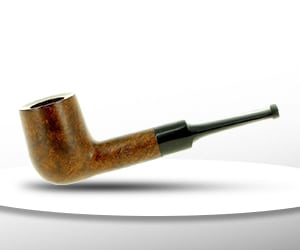
Rubber and sulfur alloy, it is the most common material because it is cheaper. In addition, it is comfortable in the mouth. That said, it does not allow aesthetic coloring, wears out, and yellows over time. Not to mention that it requires regular maintenance. Good to know: German ebonite has less sulfur content and its lifespan is longer.
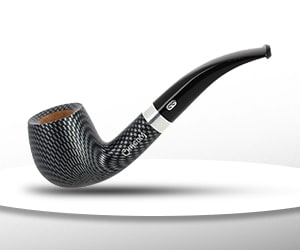
It was the manufacturer Castello who used acrylic for the first time. Since then, many other companies have ventured into designing acrylic pipes. It is a more aesthetic material, because it is colored, but also more practical, as it does not yellow and always remains shiny. The downside is significant, however, because under the teeth, this hard texture can be unpleasant. Similarly, during manufacturing, cutting is very poorly controlled, not allowing for fine mouths like with ebonite.
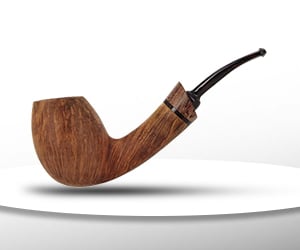
A good compromise between ebonite and acrylic, the Cumberland pipe offers a bit more aesthetic appeal than ebonite and less hardness than acrylic. Cumberland pipe stems are still less common. As a bit of history, this material is named after the address of the Dunhill factory that makes them: Cumberland Road.
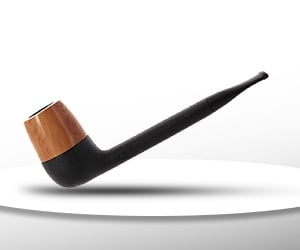
Lucite is the name of the patent filed in 1931 by DuPont and retained by the English. The French ended up calling Lucite, acrylic. The colors are varied and diverse, but in the mouth, the material lacks flexibility and the mouthpiece remains thick.
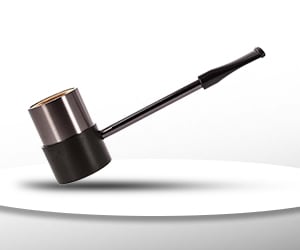
Metal is a material very rarely used for pipe stems. It is heavy, unpleasant in the mouth, heats up, and wears out more quickly. But aesthetically speaking, a metal pipe stem gives a lot of character to a pipe.
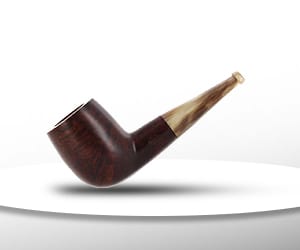
These are cow horns that are used to make horn pipes. Pleasant on the mouth, while remaining sturdy, these pipes are appreciated by enthusiasts of old-fashioned pipes. Very popular during the 19th and 20th centuries, materials like ebonite or acrylic soon stole the spotlight.
Because the aesthetics of a pipe also lie in its finish, there is something for every taste. Some prefer them natural, others more worked, here are the different possible finishes to consider the advantages and disadvantages of each:
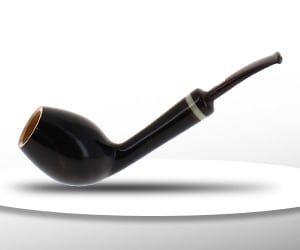
Thanks to laser technology, briar wood can now be stained and lacquered without altering its properties.
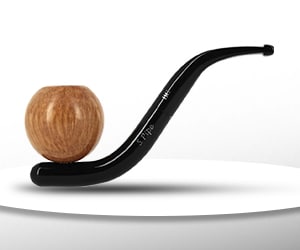
Because the waxed wood allows it to be more durable over time, waxed pipes are very common. Aesthetically speaking, they are also very appealing.
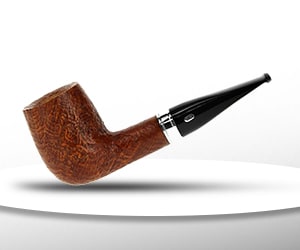
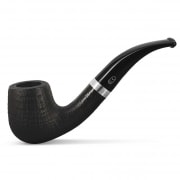
As its name indicates, the sandblasted or rustic pipe is more 'simple.' It is also the much-unloved one, because it is less aesthetic and considered less 'finished' than its waxed or natural cousins. Despite everything, it remains valued by the pipe makers of Saint Claude and is also a prized item among collectors.
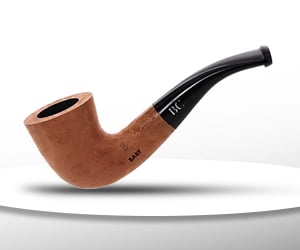
This is an authentic finish. The wood is simply polished and sometimes coated for better resistance to moisture. The natural pipe is a heritage from ancient times and offers an accessory in its simplest form.
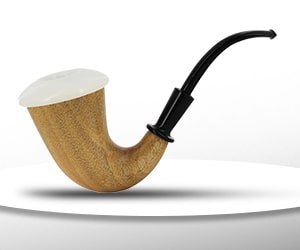
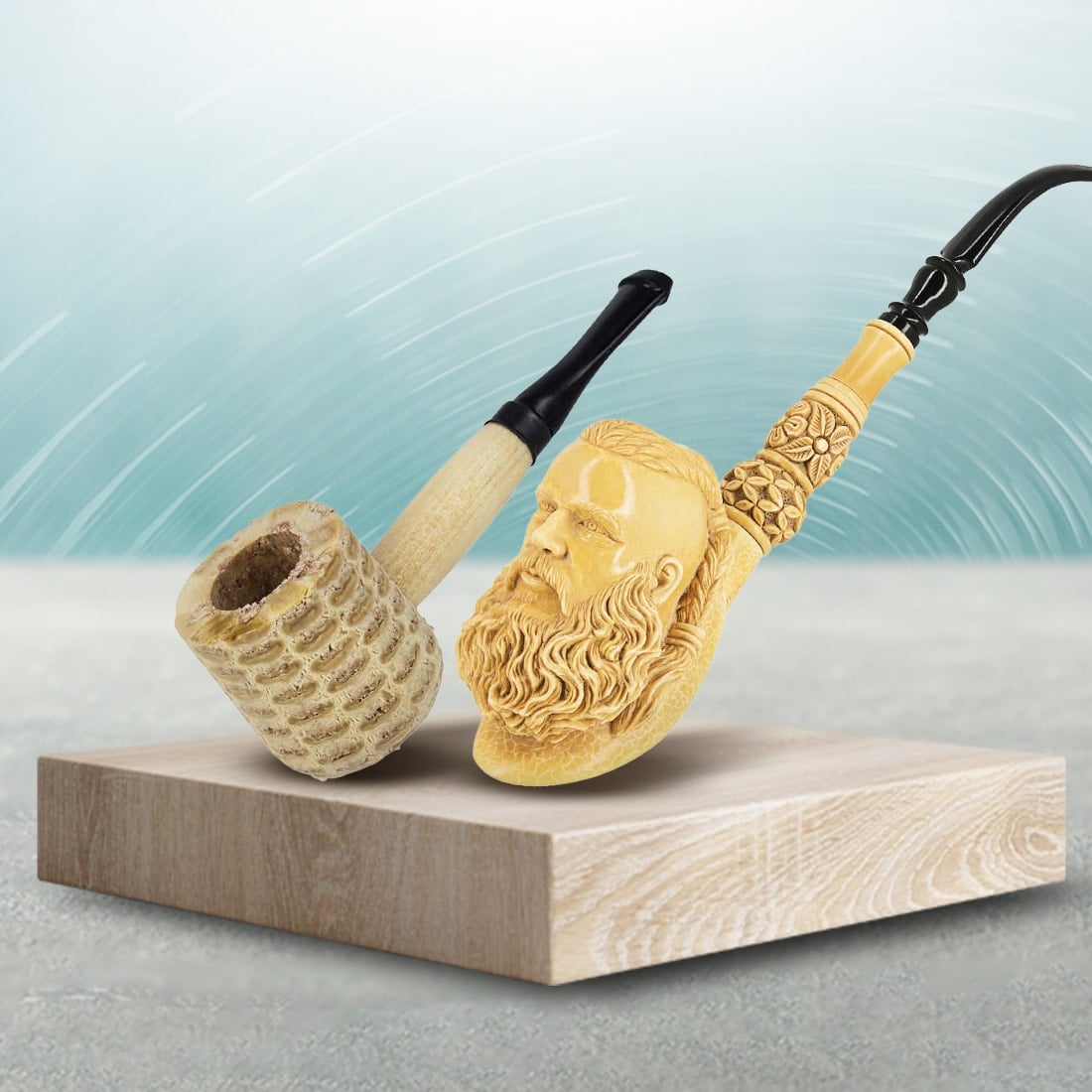
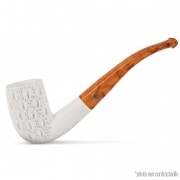
This white lime is porous and absorbent. It is a highly valued material for making pipes, as it allows for many creative designs and moldings. But it is as beautiful as it is fragile... It tends to yellow over time.
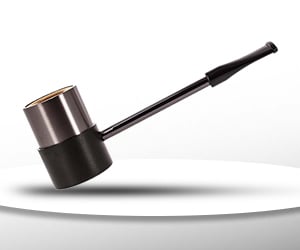
The metal-finish pipe is less common. It is mainly used by fans of aromatic herbs.
There are terracotta finishes, but they are very rare. Porcelain (very hot), morta (very expensive), and corn (disposable) were also materials widely used in the past for making pipe mouthpieces. Nowadays, few companies continue to use these materials to make their pipes.
Smoking a pipe without a filter is not highly recommended. Depending on the stem and pipe opening, each pipe can accommodate a certain type of filter. Here are the different pipe filters available on the market.
There are five types of pipe filters different, you will find in this comparison table the characteristics of each.
| Types of filters | Characteristics | Advantages | Disadvantages |
|---|---|---|---|
| Paper filters | - Rolled paper tube | - Inexpensive | - Single use - Can encourage the "gurgling" |
| Metal filters | - Several shapes available | - Durable - Easy to clean |
- Wear is inevitable and the filter must be changed from time to time |
| Meerschaum Filters | - Only usable on 9 mm pipes. - Very appreciated - Cylindrical shape and a few centimeters long - Made with meerschaum beads |
- Pleasant to use - Bulkier - Effectively capture tar and nicotine - The blotter will greatly absorb moisture |
- The slightly higher price - Sometimes attenuates the taste of certain tobaccos - Require a firmer draw |
| Activated charcoal filters | - Composed solely of activated charcoal - The most efficient filters on the market |
- Natural - Absorption capacity much more efficient than sea foam filters - No impact on the taste of the tobacco - Smooth and dry smoke |
- The more expensive price - Require a stronger draw |
| Balsa Filter | - Available in two sizes (6 and 9 mm) - Made from light and porous wood fibers |
- Triangular shape that allows smoke to pass - Do not require an excessive draw |
- Only retain a small portion of tar. |
And if the ultimate luxury was to be able to customize your own pipe ?... The company Chacom has partnered with Smoking to offer you a DIY and customizable pipe. Chacom makes the pipe of your dreams and Smoking customizes it.
Choose the general shape, then the bowl shape, and finally, the stem shape. You can add the engraving of your choice and there you have it, a unique pipe, made for you and that reflects only you.

Choosing a pipe is, like art, a most refined practice. As with everything, it is only through practice that one can form an opinion and understand what one prefers over what one likes less. Once your criteria are well established, it will be much easier to find the ideal pipe made for you.