Français
 Italiano
 Deutsch
 Español
 Português
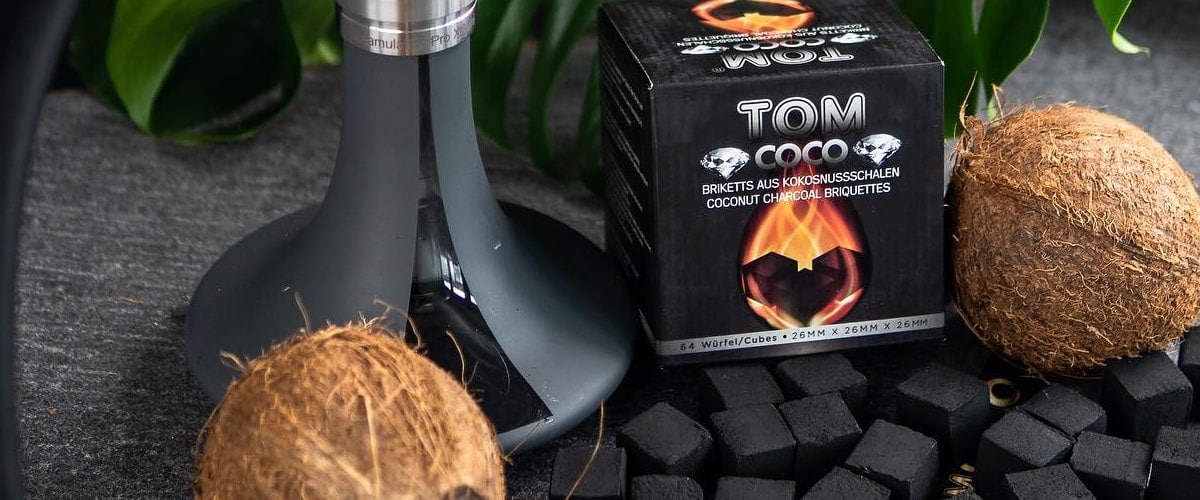
Smoking hookah is today a state of mind, another way of consuming tobacco. To light a hookah, there are two kinds of hookah charcoal that are very different. One is called quick-lighting charcoal and the other natural charcoal. Smoking hookah is spreading a lot in France. And as in all fields, there has been a great evolution.
New products have arrived on the market to make the experience more enjoyable, as is the case with charcoal.So what is the difference between the two types of charcoal and which one should be preferred? Here is a guide to help you.
Quick-lighting charcoal, as its name suggests, lights very quickly and without an explosion. It was once very common in churches to light incense. Today, it is widely used by hookah smokers. Convenient and safe, it allows a session to start quickly. People pressed for time see in quick-lighting charcoalquick-lighting, a real revolution. However, it remains much messier than natural charcoal. When igniting, quick-light charcoal will crackle a little before becoming incandescent.
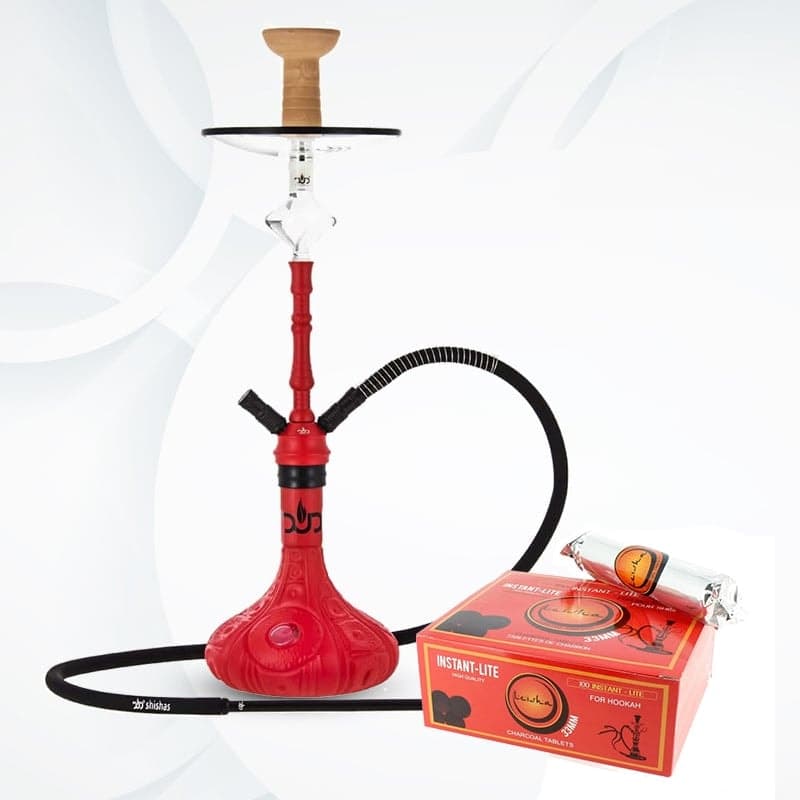
Quick-light charcoal
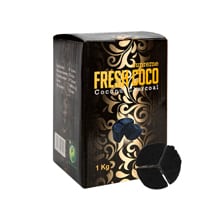
Natural charcoal is mainly made from coconut. In other words, it contains no chemical additives that allow for faster ignition. That is why it will logically light more slowly than quick-light charcoal.
On the other hand, it sometimes happens that certain natural charcoals "explode" and release smoke when lit. Nevertheless, many hookah smokers swear by natural charcoal, as it produces a slight, pleasant taste when the smoke reaches the mouth. This type of charcoal is increasingly being used.by hookah smokers.
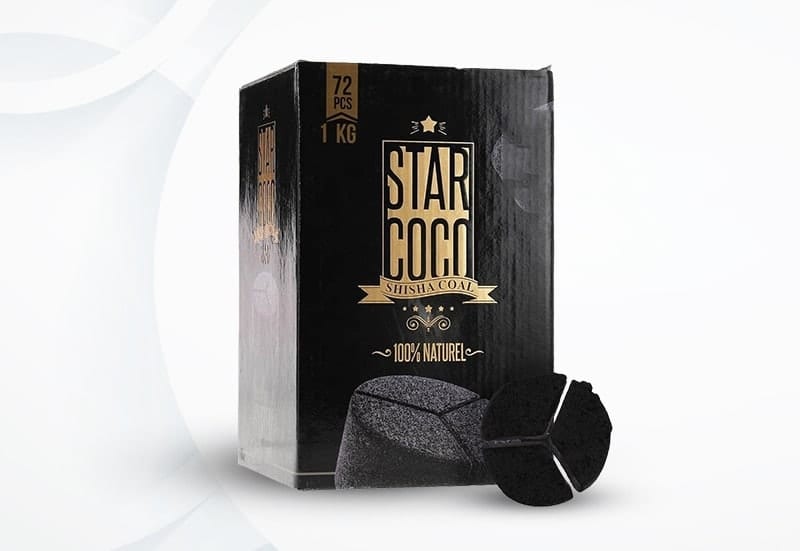
Natural charcoal
Besides the "healthy" aspect, natural charcoal does not give off any taste in the mouth that could cover that of the tobacco. On the other hand, quick-light charcoal will release a relatively unpleasant ammonia smell, which can sometimes eliminate all the flavor of the tobacco. There are also fruit-flavored varieties (apple, strawberry…).
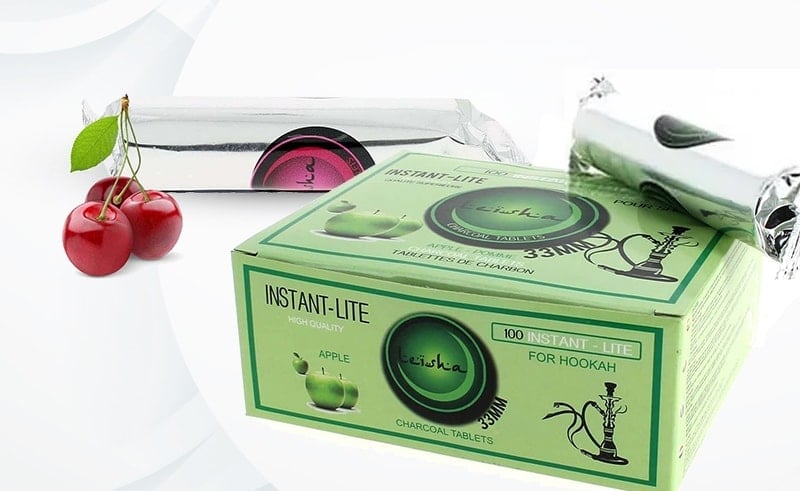
Flavored charcoal
Quick-light charcoal will only take one minute with a simple lighter to become incandescent. This is not the case for natural charcoal, which sometimes requires five times as long, and that with a specific lighting system (an electric charcoal lighter or an electric plate).
At ignition, natural charcoal does not give off any unpleasant odor, even if it smokes much more. On the other hand, quick-light charcoal has quite a strong smell, and this odor is transmitted in the inhaled smoke.
It should be noted that quick-light charcoal has a lower heating power than natural charcoal. That is why it necessarily requires the use of a sheet of aluminum to heat the tobacco and sometimes a heat regulator such as the Kaloud!Natural charcoal is more compact, so its combustion is slower and its heating power more consistent.
In 2017, natural charcoal was googled far more than quick-light charcoal. Sales of natural charcoal increase year after year. The reason? The presence of chemicals in quick-light charcoal. Although they consume tobacco, hookah enthusiasts tend to use products that are as "healthy" and as natural as possible.
For a good hookah session, the choice of charcoal is crucial, because it is what will allow the tobacco to "cook," but especially to release that wonderful smoke. The choice is not as difficult as it seems. In reality, there are no rules; it really depends on each person.
Logically, the wider the bowl, the wider the charcoal should be as well (between 40 and 50 mm). Conversely, for small bowls, small charcoals (33 mm or less) should be preferred.