Français
 Italiano
 Deutsch
 Español
 Português
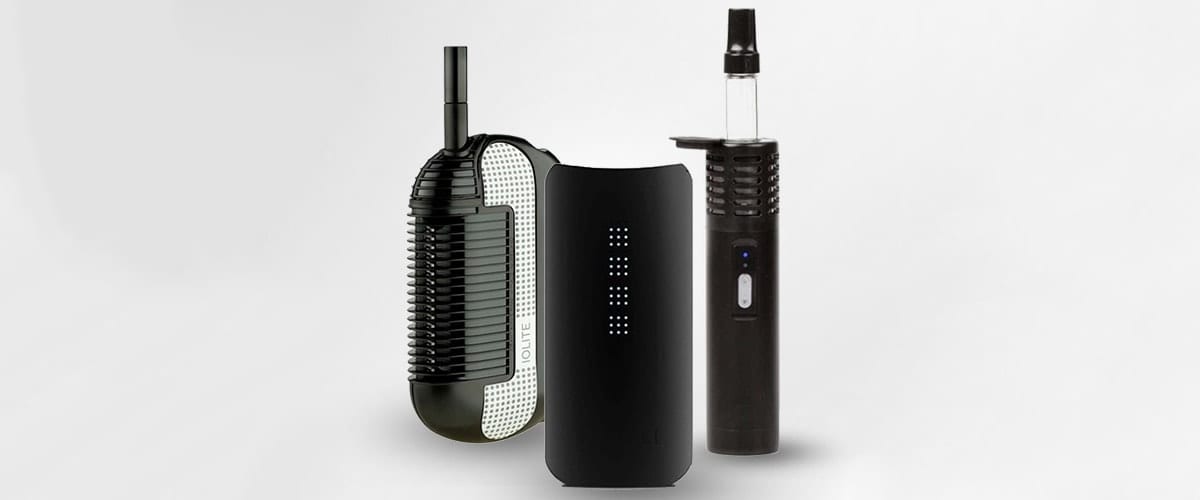
Different from a cigarette or an e-cigarette, the popularity rating of the vaporizer is skyrocketing. This small device is also economical, an important advantage for smokers or consumers of herbs or aromatic plants of all kinds. But how do vaporizers work?
First of all, you must follow the advice on the manufacturer's instructions regarding charging. Indeed, this will allow your device to maintain a longer lifespan. As a general rule, it is recommended to charge your device for 6 hours before use.
To fill your vaporizer, simply remove the connector from the ceramic heating chamber before filling it with the herb of your choice. Generally, a small tool is provided with the vaporizer to press the herb into the chamber, without packing it down.The air must be able to pass between the strands. After screwing the heating chamber back in, the device is ready to operate.
Do not overfill your heating chamber, half will be enough. If it is too full the air will not circulate properly and the herbs will be wasted. We shouldn't waste them ;-)
The vaporizer must be cleaned regularly to ensure it has a long lifespan.
While cigarettes or any other way of consuming tobacco, plants, etc., work through combustion, the vaporizer, on the other hand, will simply heat its container, at a high temperature, without reaching combustion. As a general rule, the maximum temperature does not exceed 250°C.
However, be careful, depending on the plant that the user is going to vaporize, the heating temperature must change! Indeed, eucalyptus should not be heated above 130°C, just like lavender. This helps create vapors more quickly. Two methods apply: conduction or convection.
Unlike a cigarette that burns at about 400°C, vaporization is much less hot, generally ranging between 180°C and 250°C. The air that enters the lungs is much less hot and aggressive.
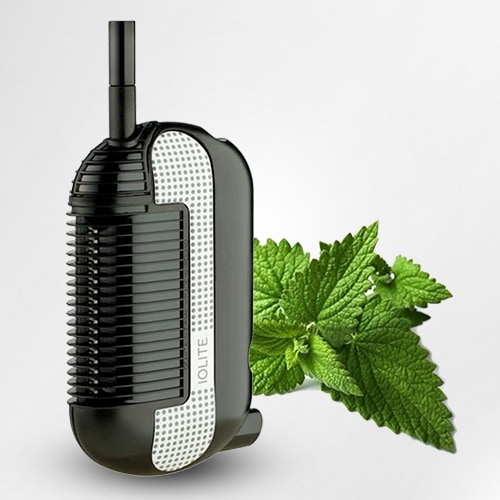
All vaporizers contain a heating element (ceramic). With the conduction method, the herbs are directly placed in a heating chamber generally made of ceramic. The hot chamber then transfers its heat to the herbs so that they release their aromas and essences. In this way, they will be ready to be inhaled by the user. The conduction vaporizer operates either thanks to a lithium battery that charges with a simple plug into the mains, or by gas, which only needs to be refilled with a gas cylinder without impurities.
The pros:
The cons:
The convection vaporizer works differently. It will heat the herbs using hot air and not with a heating surface. In these models, the herbs are separated from the heated ceramic by a grid or mesh. It is therefore indeed the air that is heated and that heats the herbs as it passes through them. Furthermore, the heating temperature is more precise than with the conduction method. Vaporization is then achieved when the hot air passes through the material contained in the chamber. The convection vaporizer works thanks to a lithium battery, or plugs directly into the mains.
The pros:
The cons:
The advantage of this type of vaporizers is that the vapor contains nothing other than the plant materials and not combustion byproducts. Therefore, there is no tar, carbon monoxide, or other arsenic.The "smoke" is almost nonexistent; you are simply inhaling air loaded with the plant's molecules. The benefits of inhaled plants are therefore preserved and more effective.
Do not be surprised to see no steam, smoke, or anything else coming out of the vaporizer. The effects of the plants are still felt even if at first you feel like you are smoking nothing. The hot air loaded with its molecules will provide the expected effects a few minutes later.
Experienced vaporization users often lean more towards a convection product. Longer to turn on, it is nevertheless more efficient in terms of its use.