Français
 Italiano
 Deutsch
 Español
 Português

Cigarette filters are an essential element of the smoking experience, playing a decisive role not only in the taste of the cigarette but also in the amount of harmful substances inhaled. With a variety of filters available on the market, each offering distinct characteristics and benefits, it is important to understand their differences in order to choose the filter best suited to your needs. This article aims to provide a detailed guide on the different types of filters for cigarettes, by exploring their composition, how they work, and their impacts on health and the environment, to help you make an informed choice.
Cellulose acetate filters (often called foam filters) are by far the most common in the tobacco industry. Their popularity is explained by their ability to efficiently filter tar and nicotine without significantly altering the taste of the cigarette.These filters are made of fine cellulose fibers, a material derived from the cotton plant, woven together to create a barrier against harmful particles. Their porous structure traps undesirable substances while allowing smoke to pass through, which reduces the smoker's exposure to these substances without completely eliminating health risks.
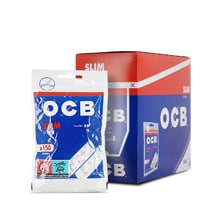
In an era where environmental awareness is on the rise, biodegradable filters, like OCB Eco Bio filters, are gaining popularity. Made from materials that break down more quickly than traditional cellulose acetate, these filters aim to reduce the environmental impact of smoking. While their filtration efficiency is comparable to that of traditional filters, their main advantage lies in their composition, which promotes faster and less harmful degradation for the environment.This represents a significant advance, especially considering the large quantity of cigarette butts that end up in nature.
The filters containing activated carbon are an innovation designed to offer a cleaner smoking experience. Activated carbon, known for its exceptional filtration properties in various applications, absorbs a greater amount of harmful substances compared to traditional filters. This ability to eliminate or reducing toxic substances such as tar and nicotine, as well as other chemical compounds present in cigarette smoke, makes these filters particularly attractive to health-conscious smokers. Additionally, some users report a smoother smoke sensation, which can enhance the smoking experience.
Cardboard filters, often used for hand-rolled cigarettes, offer a unique flexibility. The main advantage of these filters lies in their ability to be customized according to each smoker's preferences. By rolling the filter more or less tightly, it is possible to control the amount of smoke and therefore the inhaled harmful substances. Although their effectiveness in terms of filtration is generally lower than that of cellulose acetate filters, their simplicityand their very low cost makes them popular among smokers who prefer to roll their own cigarettes.
Cigarette holders, often made of hard plastic and equipped with replaceable filters, offer a durable solution to the filtration problem. These devices are designed to be reused, with the possibility of changing the internal filter after several uses.Brands like Denicotea and Niko Stop stand out by offering sophisticated filters capable of further reducing toxic substances compared to disposable filters. Their main appeal lies in their increased efficiency and in the reduction of waste, as each filter can be used for multiple cigarettes before being replaced. In addition, using a cigarette holder can also reduce the exposure of fingers to smoke and nicotine stains.
By carefully choosing the type of filter to use, smokers can not only improve their smoking experience but also take steps to reduce their environmental impact and potentially decrease their exposure to certain harmful substances. However, it is crucial to remember that no filter can completely eliminate the health risks associated with smoking.